Adhan in Morocco: Why It’s a Unique Travel Moment
You might have heard the Adhan in Morocco . It’s a sound that fills the streets of this North African country. Morocco is known for its lively culture and deep history.
The Islamic call to prayer, or Adhan or Azan, is a big part of daily life. It tells Muslims when it’s time to pray.
Exploring the call to prayer shows its importance in the community. It shapes the spiritual feel of Morocco.
The Adhan in Morocco mixes tradition and culture. It’s an experience that will make you appreciate this amazing country more.
The Significance of the Adhan in Islamic Culture
The Islamic call to prayer, known as the Azan, is more than a ritual. It’s a force that unites Muslims. As you learn about the Azan, you’ll see how it affects believers’ daily lives.
Why the Adhan Is Important
The Azan reminds Muslims of their duty to pray five times a day. It’s a time to pause, reflect, and connect with others.
The Azan is important because it:
- Reminds Muslims of their duty to worship
- Fosters a sense of community among believers
- Provides a moment for personal reflection and spiritual growth
The Role of the Muezzin
The muezzin is key in Islamic culture. They recite the Azan, leading the community in prayer. They also guard tradition and keep the community together.
The role of the muezzin is complex:
- They lead the community in prayer through the Azan
- They preserve traditional melodies and recitation methods
- They serve as a connection between the community and their faith
Connection to Faith and Community
The Azan strengthens the bond between Muslims and their faith. It also unites community members. It’s a shared experience that goes beyond borders, bringing Muslims together in devotion.
Through the Azan, Muslims remember their shared values and beliefs. This strengthens their connection to the community and their faith.
How the Azan is Delivered in Morocco
In Morocco, you can hear the Azan in a unique way. It mixes old traditions with new tech. Mosques are key, using both old and new methods to spread the call to prayer far and wide.
Traditional Methods of Calling
Long ago, the Azan came from mosque minarets. The muezzin would climb up to call people to prayer. Today, this tradition continues, with the muezzin’s voice echoing from the minarets.
The minarets are not just for the Azan. They are also beautiful landmarks for the community.
Use of Technology in Modern Times
Nowadays, technology helps spread the Adhan in Morocco. Microphones and loudspeakers on minarets make the call louder. This way, more people can hear it, even if they’re far from the mosque.
Technology also makes sure the Azan is the same everywhere. This helps keep the community united during prayer times.
The Timing of the Adhan
In Morocco, the Azan’s timing is based on the sun’s position. This affects daily life. The Islamic call to prayer is more than a ritual; it’s tied to the sun’s cycle.
How Prayer Times are Determined
Prayer times in Morocco are based on the sun’s position. The five daily prayers start with Fajr before dawn. Then comes Dhuhr at noon, Asr in the late afternoon, Maghrib after sunset, and Isha at night.
The exact timing is based on astronomical observations. For example, Fajr prayer happens when the sky lightens before sunrise. Maghrib is right after the sun sets.
Variations Across Seasons
The Azan’s timing changes with the seasons. In summer, days are longer, so Isha is later and Fajr is earlier.
In winter, days are shorter. This means Maghrib is earlier, and Dhuhr is later. These changes show the Islamic prayer schedule’s connection to the sun’s cycle.
Locations Where You’ll Hear the Azan
The Azan is a key part of Morocco’s soundscape. You’ll find it in cities and quiet places, each with its own feel and importance.
Mosques and Their Influence
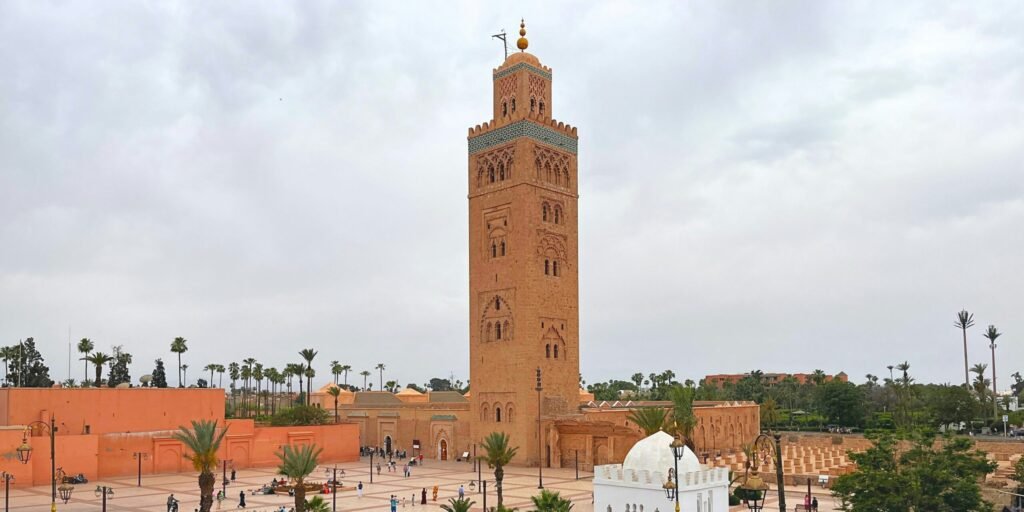
Mosques are where the Adhan is most heard. Morocco boasts many historic mosques, like the Koutoubia Mosque in Marrakech. This mosque is famous for its beauty and spiritual role. The Adhan from these mosques calls people to prayer, echoing through the area.
Public Spaces and Community Gatherings
The Adhan also fills public areas, mainly during prayer times. In lively medinas, markets, and the Atlas Mountains, it’s always present. It shapes community events and daily life, bringing people together in faith.
In Moroccan cities, the Adhan is more than a prayer call. It’s a time for everyone to pause and reflect. People stop to pray or enjoy the Adhan’s beauty. This moment strengthens community ties and adds a spiritual layer to everyday life.
Cultural Impact of the Azan in Daily Life
In Morocco, the Adhan is a big part of everyday life. It shapes the routines and traditions of the people. As you walk through the busy streets or quiet areas, the call to prayer reminds you of Morocco’s rich culture and Islamic traditions.
Integrating the Adhan into Daily Routines
The Adhan is more than a religious call for locals. It’s a daily rhythm that keeps their lives in sync. Many Moroccans plan their day around the five daily prayers, with the Adhan as their guide.
Daily Routines Aligned with the Adhan:
| Time of Day | Activity | Relation to Azan |
|---|---|---|
| Early Morning | First prayer (Fajr) | Wake-up call for many |
| Noon | Second prayer (Dhuhr) | Break for prayer during work |
| Afternoon | Third prayer (Asr) | Mid-afternoon reflection |
The Adhan as a Symbol of Identity
The Adhan is not just a prayer call; it’s a symbol of Moroccan identity. It shows the country’s strong Islamic roots and values like community, faith, and tradition.
The Adhan’s melodic voice echoes through cities and countryside. It’s a unifying element that goes beyond geography and social class.
Differences in Adhan Across Regions
Traveling across Morocco, you’ll see the Azan changes from place to place. It shows the country’s rich culture and varied landscapes.
In cities like Marrakech and Rabat, the Adhan is loud and clear, thanks to modern sound systems. But in rural areas, the muezzin’s voice carries through the village, keeping tradition alive.
Comparing Urban and Rural Calls
In cities, the Adhan is loud and clear, thanks to sound systems. This is true in big cities with tall minarets. But in rural areas, the call is more personal, fitting the smaller, closer communities.
| Characteristics | Urban Adhan | Rural Adhan |
|---|---|---|
| Sound System | Modern, amplified | Traditional, less amplified |
| Community Size | Large, diverse | Small, closely knit |
| Call Style | Uniform, standardized | Diverse, traditional |
Unique Variations in Melody and Style
The Adhan’s melody and style change from region to region. The way the Adhan is recited can vary, depending on the Moazzin’s voice. Some areas have a more melodic call, while others are more straightforward.
The Adhan’s variations enrich Morocco’s Islamic heritage. It makes the call to prayer a special experience in every part of the country. Whether in a busy city or a quiet village, the Adhan connects people to their faith.
The Experience of Listening to the Azan
Listening to the Adhan in Morocco is deeply moving. The call to prayer brings peace and serenity. It’s more than a ritual; it’s a moment that unites the community.
Evoking Emotions and Reflections
The Adhan deeply affects those who hear it. The dawn Adhan, with words like “Prayer is better than sleep,” stirs the spirit. It invites believers to begin their day with reflection and prayer.
The melodic tones of the Adhan stir strong emotions. They bring peace, tranquility, and a deep connection to faith and community. It’s a time for introspection and reflection on one’s actions and intentions.
Community Reactions During the Call
During the Adhan, the community comes together. People stop their daily tasks to listen and pray. This shared experience is felt everywhere, from mosques to homes.
The community’s response to the Adhan shows Morocco’s strong religious traditions. Some key reactions include:
- A sense of calm and peace as the community unites in prayer.
- An increase in spiritual reflection and introspection.
- A renewed commitment to faith and daily practices.
The Adhan in Morocco is a powerful symbol of faith and community. It reminds believers of their duties and responsibilities, fostering unity and shared purpose.
Visitors’ Impressions of the Adhan
Visitors to Morocco are often amazed by the beautiful call to prayer. For those who are not Muslim, it’s a way to see into Islamic life. As you walk through markets and mosques, the muezzin’s voice is always there, showing the spiritual heart of Morocco.
First-Time Experiences
For many tourists, the Adhan is their first experience. The sound takes them to a world of tradition and faith. The call to prayer is not just a sound; it’s an experience that resonates deeply with those who hear it. One visitor said, “The Adhan in Morocco was the most hauntingly beautiful sound I’ve ever heard. It was as if the very soul of the country was speaking to me.”
How Tourists Engage with the Tradition
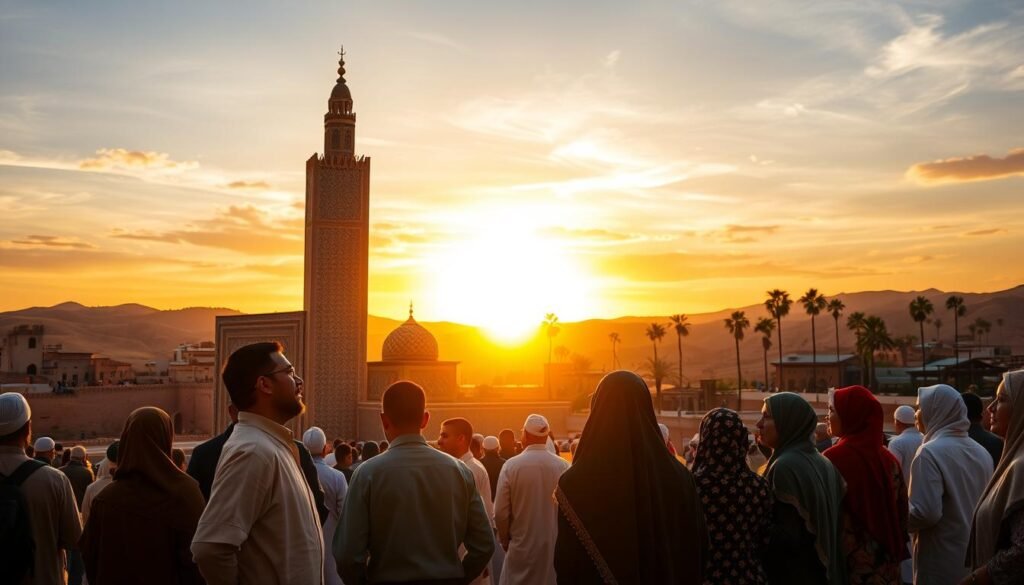
Tourists are drawn into the Adhan tradition. Many go to mosques or public gatherings to hear it. Some join local events to learn about the Adhan’s role in Moroccan culture and Islam. This makes their trip richer and helps them understand local customs better.
| Aspect | First-Time Visitors | Repeat Visitors |
|---|---|---|
| Emotional Response | Often surprised and moved | Develops a deeper emotional connection |
| Level of Engagement | Curiosity-driven exploration | Actively seeks out cultural events |
| Perception of Adhan | Sees it as a unique experience | Understands its cultural significance |
As tourists keep exploring Morocco, they grow to love the Adhan. It’s more than a religious act; it’s a way for visitors to connect with the culture and community.
The Future of the Azan in Morocco
The Adhan is more than a call to prayer; it’s a symbol of Morocco’s rich culture and faith. As you explore Morocco’s cities and countryside, the Adhan’s voice reminds us of faith’s importance in our lives.
Trends Shaping the Adhan
Modern society is changing how the Adhan is called. Technology is key, with many mosques using digital systems to broadcast the call. This keeps the Adhan a vital part of Moroccan life, even as the country modernizes.
Preserving a Timeless Tradition
Yet, efforts are made to keep traditional Adhan methods alive. The unique melodies and styles of Morocco’s Adhan are preserved through training new muezzins and restoring historic mosques. So, the Adhan remains a key part of Morocco’s religious traditions.
When you hear the Adhan in Morocco, you join a long tradition that combines faith, culture, and community. The Adhan’s role in Islamic prayer and Morocco’s religious traditions will continue to be important.