Taking a Moroccan Cooking Class (and Why It’s the Best Souvenir)
Imagine diving into the rich flavors and scents of Moroccan cuisine in a hands-on cooking class. Did you know millions of travelers find learning to make traditional dishes unforgettable? By joining a cooking class, you learn new recipes and understand local culture better.
Exploring Moroccan flavors reveals the secrets of famous dishes. This experience lets you connect with local traditions. You’ll leave with more than a souvenir; you’ll have the skills to make the dishes you loved.
What to Expect from a Moroccan Cooking Class
Signing up for a Moroccan cooking class is an exciting adventure. Moroccan food is known for its rich flavors and diverse influences. It’s a fascinating subject to explore.
Introduction to Moroccan Cuisine
In a Moroccan cooking class, you’ll learn about the basics of Moroccan cuisine. You’ll discover how history and culture have shaped its dishes. This knowledge helps you understand the importance of different foods and ingredients.
Common Ingredients Used
Moroccan cooking uses fresh ingredients like vegetables, fruits, meats, and spices. You’ll learn about key ingredients like olives, preserved lemons, and spices like cumin and coriander. The class will teach you how to choose and prepare these ingredients.
Overview of Cooking Techniques
Moroccan cooking techniques are varied and flavorful. You’ll learn about slow-cooking in a tagine, making couscous, and pastry-making. The class offers hands-on practice, helping you master these techniques with expert guidance.
By the end, you’ll appreciate Moroccan cuisine more and know how to make traditional dishes at home. You’ll feel confident in using Moroccan cooking techniques to make tasty meals.
Why Choose a Cooking Class as a Souvenir
Choosing a Moroccan cooking class as a souvenir means more than just a recipe book. It’s about experiencing the heart of authentic Moroccan cuisine. A cooking class lets you dive into Morocco’s rich culinary traditions.
A Unique Cultural Experience
When you join a Moroccan cooking class, you learn more than just recipes. You gain insight into Morocco’s vibrant culture. It’s a way to understand food’s role in daily life and the importance of traditional ingredients.
You’ll explore the diverse flavors and ingredients that make Moroccan culinary experience unique. From aromatic spices to fresh produce, each element is key to Moroccan cuisine’s taste.
Creating Lasting Memories
The memories from a Moroccan cooking class are as valuable as the skills you learn. As you chop, sauté, and simmer, you create moments that last. These moments are a big part of what makes a cooking class a great souvenir.
You’ll leave with new culinary skills and stories to share. These lasting memories are what make a cooking class special. They’re a treasure to share with friends and family.
Popular Cities for Moroccan Cooking Classes
Several cities in Morocco are known for their top-notch cooking classes. Morocco’s rich food culture offers a unique taste experience in each city. Each place adds its own twist to traditional cooking.
Moroccan food combines Arab, Mediterranean, and African flavors. Cities across Morocco are famous for their cooking classes. These classes dive deep into the local food culture.
Marrakech: A Culinary Hub
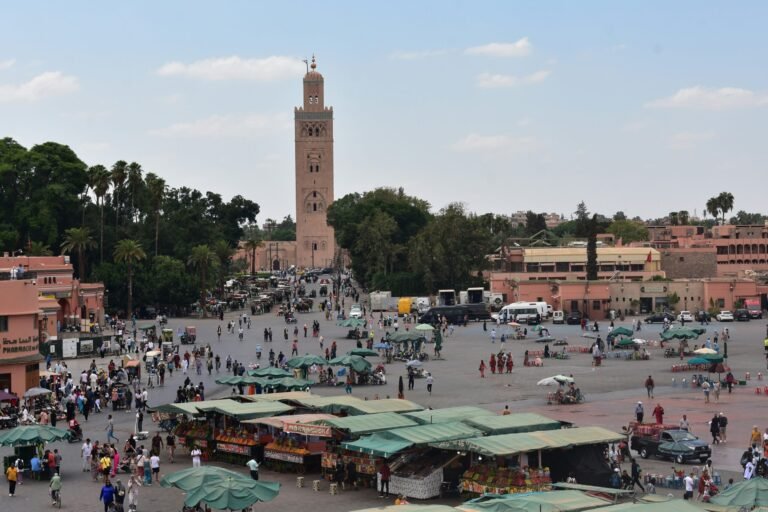
Marrakech is Morocco’s food heart. Its souks and streets are filled with food stalls and restaurants. Cooking classes here introduce you to Moroccan cuisine, from spices to tagines.
Marrakech’s classes are loved for its rich food history and cultural mix. You’ll learn about spice balance, fresh ingredients, and cooking techniques passed down through generations.
Fes: Traditional Techniques and Flavors
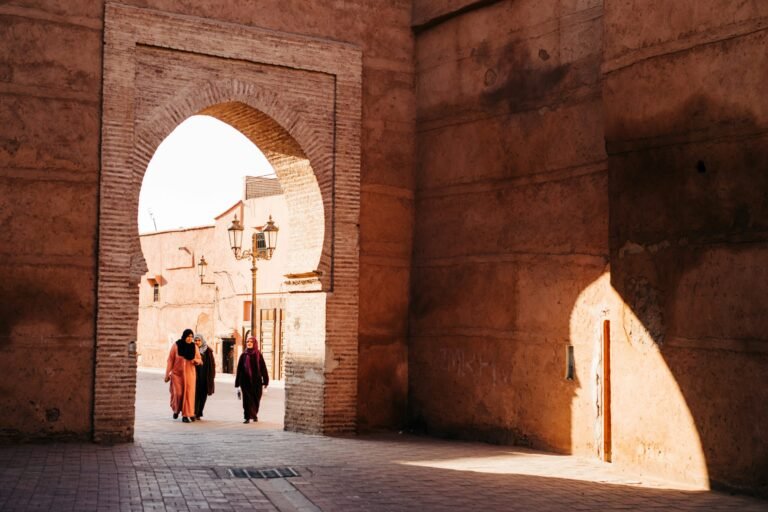
Fes offers a traditional Moroccan cooking experience. Its ancient medina and history make it a special place for learning. Classes focus on classic Moroccan dishes and techniques.
In Fes, classes are held in traditional riads. Here, you’ll learn to make authentic dishes like couscous and pastilla in a culturally rich setting.
Essaouira: Coastal Influences
Essaouira is a charming coastal town known for its fresh seafood and local ingredients. Cooking classes here show how the sea and land mix in local cuisine.
In Essaouira, you’ll learn about seafood dishes and traditional Moroccan recipes. It’s a unique coastal cooking experience.
| City | Culinary Specialty | Class Highlights |
|---|---|---|
| Marrakech | Rich culinary history, spice markets | Tagine cooking, spice blending |
| Fes | Traditional techniques, historical significance | Couscous preparation, pastilla making |
| Essaouira | Coastal cuisine, seafood | Seafood tagines, local ingredients |
Essential Dishes to Learn in Class
Joining a Moroccan cooking workshop lets you explore the heart of Moroccan cuisine. You’ll learn to make its most iconic dishes. These dishes are not just tasty but also carry deep cultural and traditional meanings.
The Significance of Tagine
Tagine is a slow-cooked stew cooked in an earthenware pot. It’s the heart of Moroccan cooking. It’s made with meat, veggies, and dried fruits, all flavored with spices. In class, you’ll learn to layer flavors and cook tagine just right.
Couscous: A Staple of Moroccan Meals
Couscous is a traditional North African dish from durum wheat semolina. It’s a staple in Moroccan cuisine. It’s often served with veggies, meat, and sauce. In class, you’ll learn to steam couscous to get it fluffy.
Pastilla: A Sweet and Savory Delight
Pastilla is a savory pie with flaky pastry, meat, onions, and spices. It’s topped with sweet powdered sugar. It’s a highlight of Moroccan celebrations and a challenge for cooks. Your class will teach you how to make pastilla, from filling to pastry layers.
| Dish | Main Ingredients | Cooking Technique |
|---|---|---|
| Tagine | Meat, Vegetables, Dried Fruits, Spices | Slow Cooking |
| Couscous | Semolina, Vegetables, Meat, Sauce | Steaming |
| Pastilla | Pastry, Meat, Onions, Spices, Powdered Sugar | Layering and Baking |
Learning these traditional Moroccan recipes in a workshop will deepen your appreciation for Moroccan cuisine. You’ll be able to make these dishes at home.
What to Bring to Your Cooking Class
Getting ready for your Moroccan cooking class? It’s key to know what to pack. A Moroccan cooking class is more than just recipes. It’s a dive into culture. Being ready will make your experience better.
Required Items and Gear
Most classes will tell you what to bring. But, you’ll need a few basics. Wear comfy clothes that can handle spills. Also, bring a notebook and pen for notes on Moroccan cooking techniques.
Some classes might ask for specific ingredients or tools. It’s wise to check with your class provider early. This way, you won’t have to rush at the last minute.
| Item | Purpose |
|---|---|
| Notebook and Pen | For noting recipes and techniques |
| Comfortable Clothing | For a mess-free (or less messy) cooking experience |
| Cooking Utensils (if required) | For preparing and cooking dishes |
Optional Personal Touches
While not required, adding personal touches can enhance your class. Bring a favorite spice or ingredient to share. It’s a great way to connect with others.
Consider bringing a camera to capture your creations and the class. Sharing your cooking adventures on social media can help you connect with others who love learning Moroccan cooking.
Engaging with Local Chefs
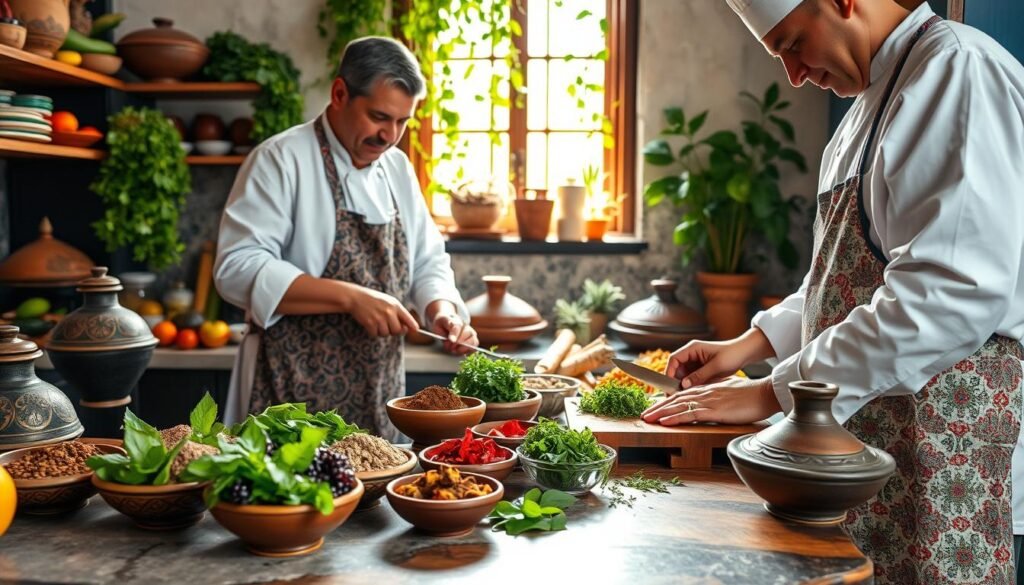
Talking to local chefs is a big part of any Moroccan cooking class. It lets you dive deep into authentic Moroccan cuisine. You learn more than just how to cook; you also get to know the culture and traditions behind Moroccan dishes.
Learning from Experienced Instructors
Local chefs share their vast knowledge in traditional Moroccan cooking. You’ll learn how to make tagines and couscous from scratch. Their years of experience will help you grasp the details of Moroccan cooking.
The classes are hands-on, so you get to work with the chefs. You can ask them about the recipes and techniques. This way, you learn new skills and understand the history and context of the dishes.
The Benefit of Personal Stories
Listening to local chefs’ personal stories is incredibly enriching. They share the cultural importance of certain dishes. These stories highlight the role of food in family gatherings and celebrations.
By learning from local chefs, you see that Moroccan cuisine is more than just food. It’s about the people and traditions that make it special. This personal touch makes the cooking class unforgettable, even after you’re back home.
The Role of Spices in Moroccan Cooking
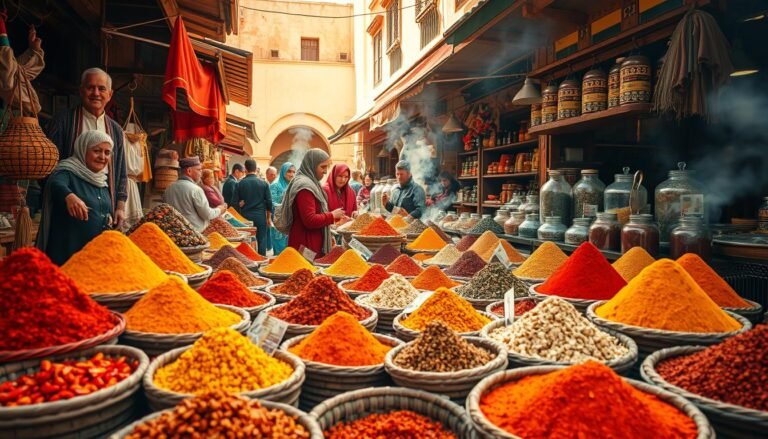
Moroccan cooking is all about spices. They turn simple ingredients into amazing dishes. When you take a Moroccan cooking class, you’ll learn how spices are key to real flavors.
Moroccan food is famous for its spice blends. These blends include cumin, coriander, cinnamon, and ginger. They also have turmeric, paprika, and cayenne pepper. These spices add flavor and make dishes smell great.
Key Spices and Their Uses
Knowing the main spices in Moroccan cooking is important. Here’s a list of essential spices and how they’re used:
| Spice | Common Use |
|---|---|
| Cumin | Used in tagines and couscous dishes for its earthy flavor. |
| Coriander | Adds a sweet, citrusy flavor to various dishes. |
| Cinnamon | Often used in sweet and savory dishes, including tagines and pastries. |
| Ginger | Provides a warm, spicy flavor to many Moroccan dishes. |
How to Properly Use Spices
Spices need to be used right, and it takes practice. Here are some tips to help you:
- Start with small amounts: It’s easier to add more spice than it is to remove excess spice from a dish.
- Blend spices: Moroccan cuisine often employs complex spice blends. Experiment with different combinations to find the perfect balance for your dishes.
- Toast your spices: Toasting spices can enhance their flavors. Try toasting whole spices before grinding them for added depth.
As you keep learning with a best Moroccan cooking class, you’ll get better at using spices. You’ll learn how to mix flavors to make delicious, true Moroccan dishes.
Tips for a Fun Cooking Experience
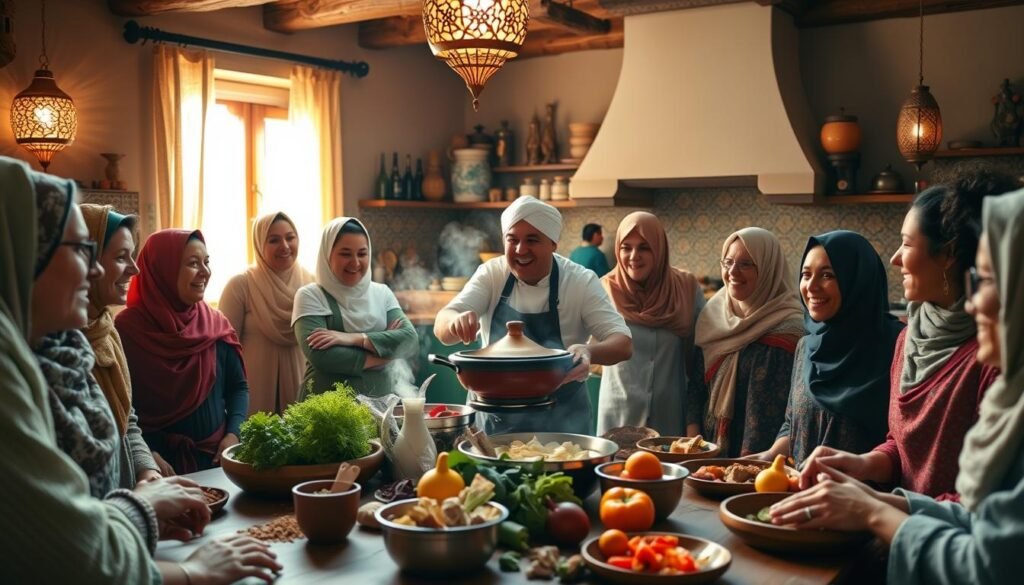
To get the most out of your Moroccan cooking class, it’s key to be open-minded. A Moroccan cooking workshop is more than just learning recipes. It’s a dive into Morocco’s rich culinary traditions.
Stay Open-Minded and Curious
Being open-minded lets you fully enjoy the unique flavors and techniques of Moroccan food culture. Don’t shy away from trying new ingredients or cooking methods. The more you’re willing to try new things, the more rewarding it will be.
- Be ready to learn about various spices and their uses in Moroccan cuisine.
- Engage with your instructors and ask questions to deepen your understanding.
- Enjoy the process and don’t worry if your dishes don’t turn out perfectly; it’s all part of the learning experience.
Embrace the Process
Cooking is more than just following a recipe. It’s about understanding the culture behind the food and the techniques passed down through generations. By embracing this, you’ll appreciate Moroccan cuisine more and enjoy cooking.
- Take your time to understand the ingredients and their preparation.
- Practice the techniques demonstrated by your instructors.
- Savor the experience and enjoy the fruits of your labor with your fellow classmates.
By staying open-minded and embracing the cooking process, you’ll have a fun and memorable time in your Moroccan cooking workshop. You’ll also take home valuable skills and memories.
Setting the Perfect Atmosphere
The right atmosphere can make your Moroccan cooking class unforgettable. It turns a simple cooking lesson into a memorable experience. When you’re in the right setting, you dive deeper into Morocco’s culinary traditions.
Traditional Moroccan Decor
Traditional Moroccan decor is key to creating an authentic feel. You’ll see vibrant colors, detailed patterns, and fancy furniture. These show Morocco’s rich cultural heritage.
Key elements of traditional Moroccan decor include:
- Richly colored tiles and textiles
- Intricately carved wooden furniture
- Aromatic scents like frankincense and myrrh
These elements make the space beautiful and transport you to Morocco. Your cooking class becomes a real cultural adventure.
The Importance of Family-Style Dining
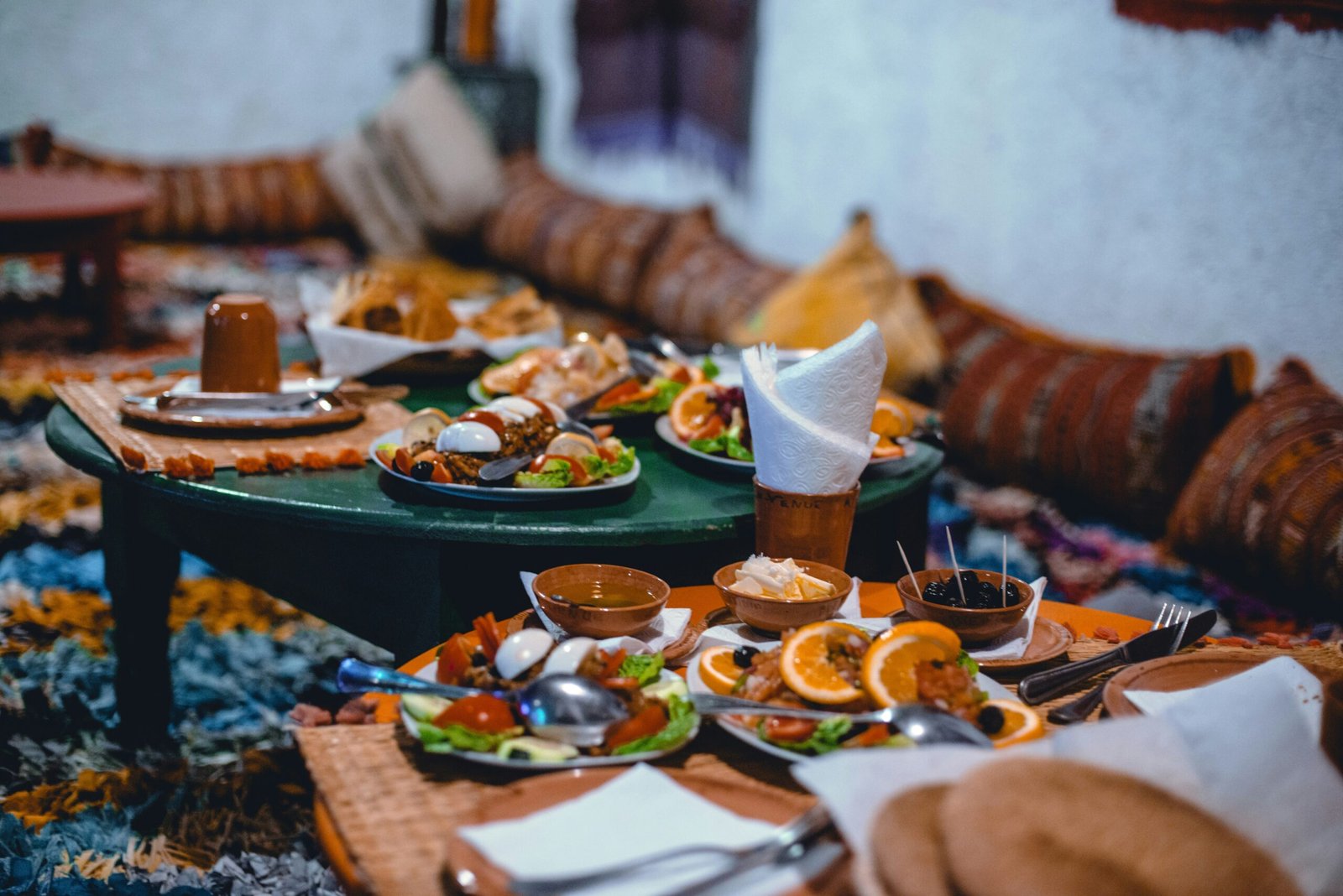
Family-style dining is a big part of Moroccan culture. In a traditional cooking class, you’ll eat together. This creates a sense of togetherness and shared joy.
The benefits of family-style dining include:
- Encouraging social interaction and bonding over food
- Allowing you to sample a variety of dishes
- Creating a warm and welcoming atmosphere
Family-style dining lets you enjoy your meal and feel Morocco’s famous warmth and hospitality.
Continuing Your Culinary Journey
Finishing your Moroccan cooking class is just the start. You’ve learned new skills and flavors. Now, you can explore Moroccan cuisine for life.
Practical Steps to Continue Learning
Start by making the dishes you learned at home. Try new recipes with the spices and techniques you know. This will improve your cooking and deepen your love for Moroccan flavors.
Sharing Your Experience with Others
Teach your friends and family what you’ve learned. Host a dinner with the dishes you’ve mastered. Share the stories behind them. This way, you’ll connect with others through food and keep your class memories alive.
Keep learning and sharing your love for Moroccan cooking. This will keep you connected to the culture and community you experienced. You can enjoy the Moroccan culinary experience even after leaving Morocco.